LECTURE 0: course overview

Logistics


Lecture: Monday, Wednesday, Friday 1:15-2:10, 1-304
Lab: Monday or Tuesday or Friday 2:55-5:35, 4-419
Credits: 3

Instructors

Dr. Clark Rushing
clark.rushing@uga.edu
Office: 3-409
Office hours: M 1:00-2:30

TAs

Alan Bond (M)
alan.bond1@uga.edu
Office: 1-102
Office hours: Th 10:00am-12:00pm

Emily Card (Tu)
ec76834@uga.edu
Office: 3-402
Office hours: W 11:00am-1:00pm

Hannah Wright (F)
Hannah.Wright1@uga.edu
Office: 3-402
Office hours: Tu 9:30-11:30 or by appointment

Course schedule and materials


Lectures and labs: rushinglab.github.io/FANR67501


Primary texts (not required)

Fieberg, J. (2022). Statistics for Ecologists - A Frequentist and Bayesian Treatment of Modern Regression Models. An open-source online textbook.

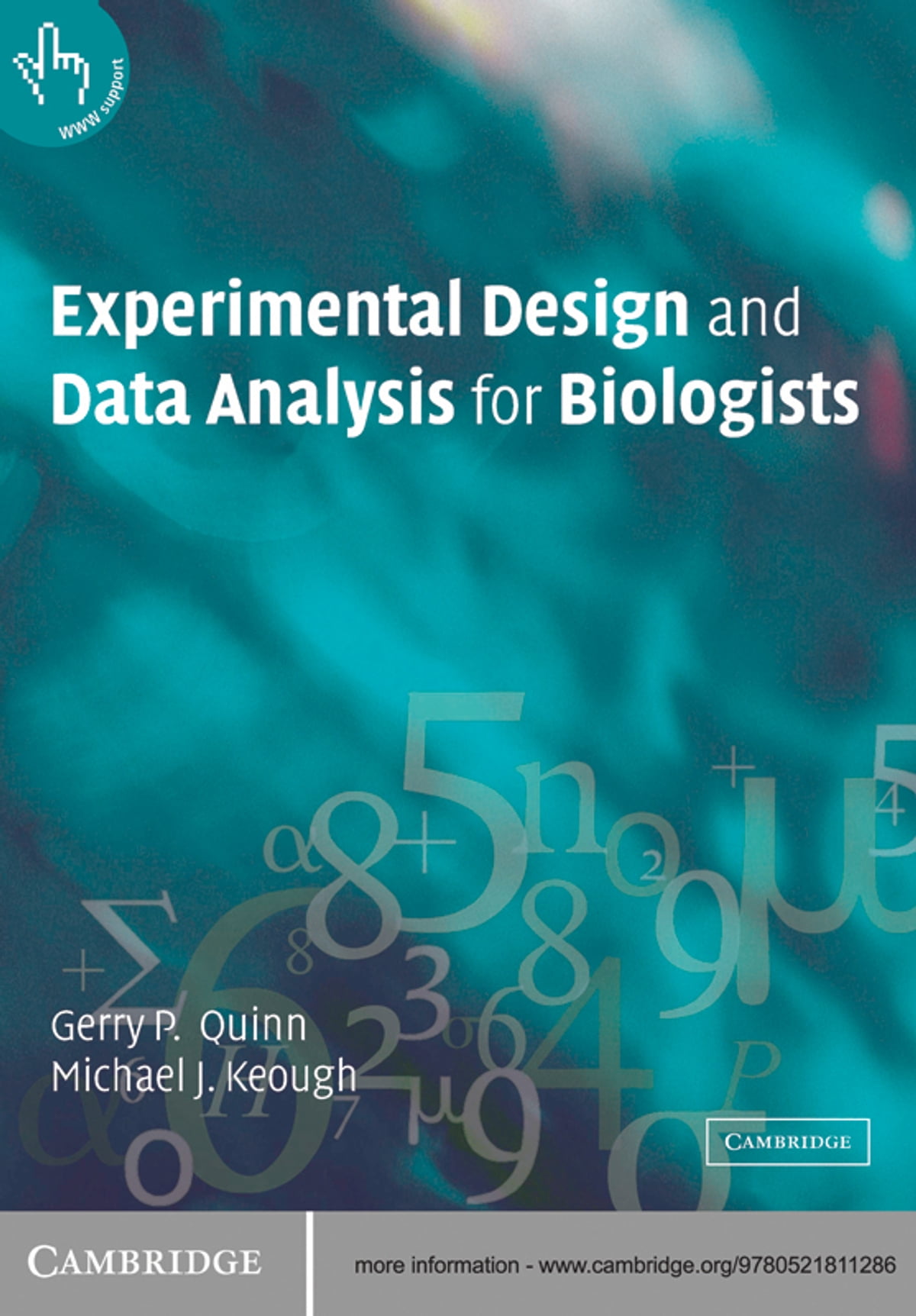
Quinn, G.P. & Keough, M.J. 2002. Experimental Design and Data Analysis for Biologists. Cambridge University Press.
Lecture slides

All slides are shared as HTML presentations via the course website.

See these instructions for details about:

  • Navigating

  • Footnotes (hover and end)

  • Presentation notes

  • Printing

Labs

Meet weekly

  • You should have registered for one and only one lab section

  • Always attend your assigned lab section unless both TA’s have provided prior approval to attend the other section

Taught in R

  • No prior experience required

  • But those without prior experience may need to spend time learning outside of class

  • You can use your own laptop but make sure you have R and RStudio installed prior the first lab 2

Lab assignments

  • 8 throughout semester

  • Meant to help with

    • Understanding lecture/lab concepts
    • Implementing statistical procedures in R
    • Interpreting and presenting results
  • Worth 10 points each

    • Grade based on turning in complete assignment on time
    • Answer keys will be posted after all assignments have been submitted

Grading

200 points total

  • 3 lecture exams, 40 points (20%) each

    • In-class format using eLC/Lockdown Browser 3
    • Primarily focused on concepts, not coding
    • Pool of 8-10 potential questions provided in advance
    • Exam consists of 2 questions chosen by me, 2 questions chosen by student
    • Not (explicitly) cumulative
    • See schedule for approximate dates (subject to change)
  • 8 lab assignments, 10 points (5%) each

Note on ai

AI tools (e.g., ChatGPT) have advanced very rapidly in a very short time

  • AI can increasingly help answer questions about statistical concepts, coding, etc.

AI = resource (similar to Google, Cross Validated, etc.)

  • AI can help you perform statistical analyses but it cannot replace your own statistical knowledge

My goal is not to fight AI, but instead focus on responsible and appropriate use

  • Students may use AI to assist with lab assignments but must acknowledge, document, and assess all AI use

  • Students may use AI to assist with exam preparation but must complete exams without the use of AI

  • Unacknowledged use of AI will be considered a violation of course policy. Suspected violations will be referred to the Office of Academic Honesty

Note on ai

Later in the semester, we will have a class discussion on the role of AI in research/statistical analysis

In preparation for that discussion, I highly recommend reading Bull$&!t Machines, a short, self-paced course on the LLM

Remote students

Although we do our best to make instruction and materials accessible to remote students, this is not officially a hybrid class. That has several implications

  • Teaching to in-person and remote students is hard, especially labs. Technology problems are inevitable

  • Remote students should be prepared to spend extra effort engaging with course materials

  • Remote students must arrange to take exams with a proctor present and exam arrangements must be approved by the instructor prior to the exam

  • MAKE SURE YOU HAVE ACCESS TO THE PRIMARY eLC PAGE!

A note to in-person students:

In my experience, lab and lecture attendance are strong predictors of performance. Although zoom links can be used for brief or unanticipated absences, students based in Athens should attend classes in person

Course objectives


To understand:

  1. The logical structure of experiments, including the design of manipulative and observational experiments
  1. The logic of statistical inference, including causation, from manipulative and observational experiments
  1. The analysis of such experiments, focusing on linear models
  1. The use and interpretation of models in ecological studies

Basic structure

  1. Foundational concepts for statistical inference

  2. Linear model basics

  3. Null hypothesis significance testing

  4. Experimental design and causal inference

  5. Linear model variations for experiments (t-tests, ANOVA, ANCOVA)

  6. Generalized linear models and model selection

Pre- and post-course assessment

Two short quizzes used to assess collective learning outcomes

  • Posted under Quizzes on eLC

  • Require Lockdown Browser extension

  • Pre-assessment available until 8/24/2026

The assessments do not count towards your grade, but students who complete them will receive extra credit on their final grade

  • 2 points for completing pre-assessment

  • 2 points for completing post-assessment

  • 1 points for completing both assessments (5 points total)

Looking ahead


Next time: Basic Concepts in Statistics


Reading: Quinn chp. 1

Footnotes

  1. Bookmark this page!

  2. See here for instructions

  3. Remote students must take exams during class period in an approved setting