Replication
Imagine we are interested in whether predation by birds reduces the abundance of phytophagous insects on trees
To test this hypothesis, we place an wire exclosure around one tree and leave the neighboring tree unmanipulated. We then collect 10 branches from each tree, count the number of insects on each branch, and calculate the average number of insects per branch on each tree
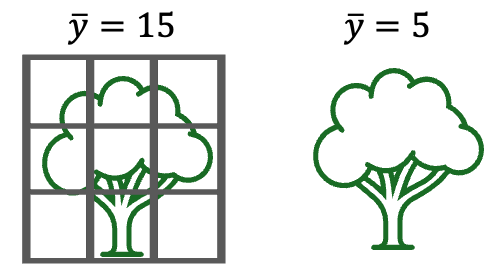
Question: Can these samples test the hypothesis that birds influence insect abundance?
Replication
This design is inadequate for testing our hypothesis because it is unreplicated (among other reasons)
Why is replication important?
Experimental units will differ from one another, or from their expected value, for many reasons
Without replication, our treatment will always be confounded with other sources of variation
Due to this confounding, it is impossible to conclude whether observed differences are due to the treatment
Replication
Replication is critical because it allows us to quantify how much variation there is between treatments relative to all the other sources of variability
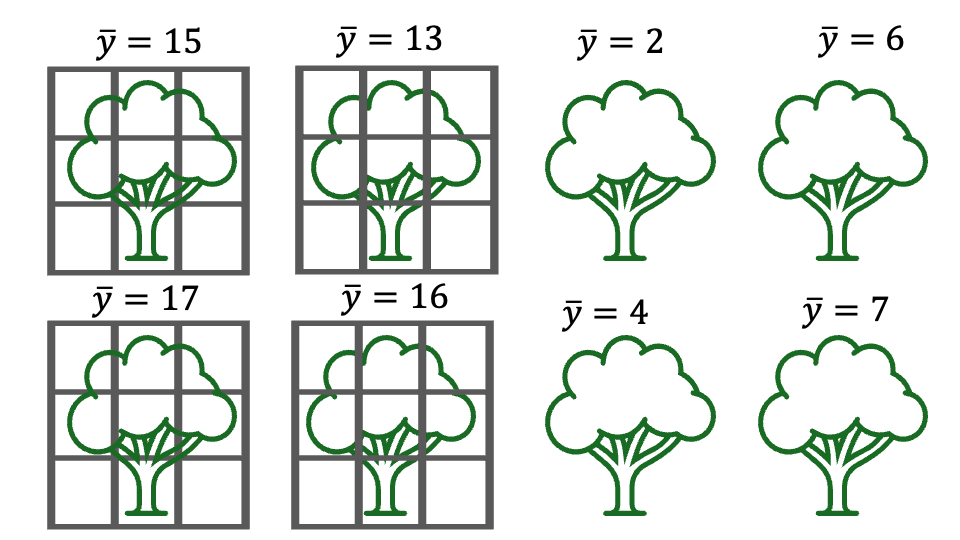
If differences among treatment groups are larger than differences within groups, we are more confident about the treatment effect
We will return to this idea throughout the semester, as it is key to interpreting the output of statistical models
Replication is necessary for any type of experiment (manipulative, quasi-experiments, observational)
How does replication help with confounding?
Replication
Question: Can these samples test the hypothesis that birds influence insect abundance?
Replication is necessary, but not sufficient, to remove confounding
Replication, when combined with randomization, helps to ensure that treatment effects are not confounded with other sources of variation
For this reason, randomization is arguably the most important component of a good experiment!
Randomization
In our previous example, imagine we could only reach branches near the bottom of the trees, so all of our samples came from this region

Are these samples sufficiently randomized?
How could we revise our protocol to achieve a more representative sample?
Randomization
In some cases, completely random sampling is not sufficient to obtain representative samples
Example: Suppose the study area where we are conducting our exclosure experiments is composed of both oak and fir trees. We have enough money to build 10 exclosures so we randomly select 10 trees to receive the treatment
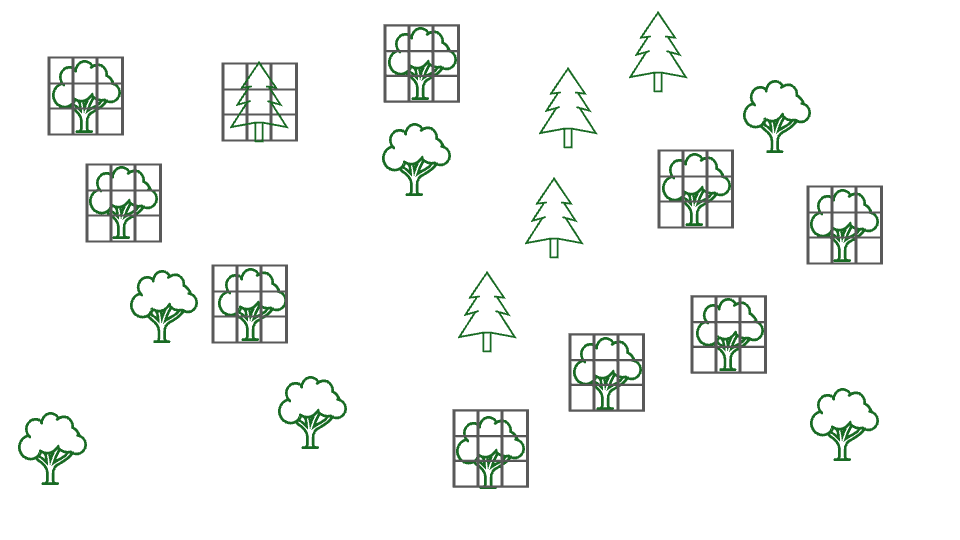
Questions: What is the “population” in this example? Are these samples likely to representative of that population?
Randomization
In cases where sampling units can be divided into discrete groups, stratified random sampling is often used to ensure representative samples
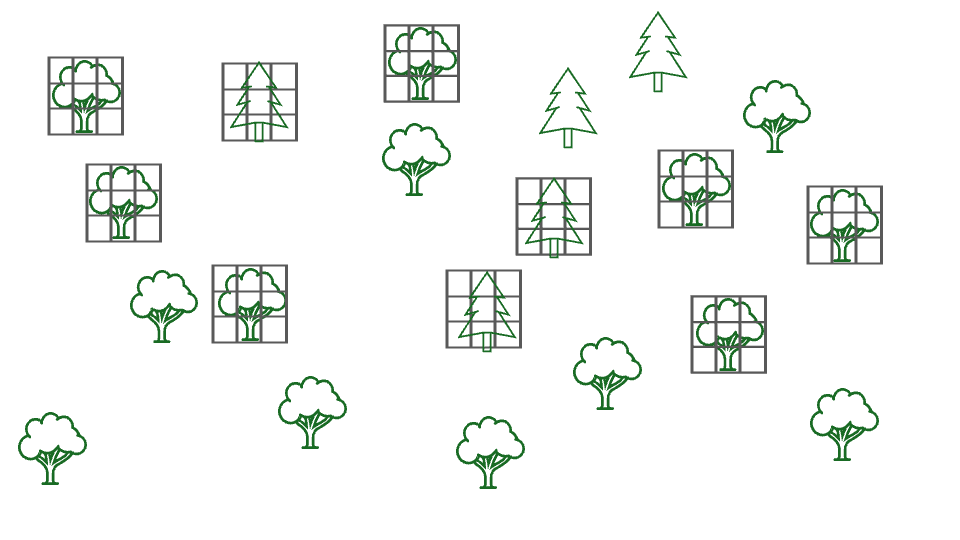
Stratified random sampling consists of:
Dividing sampling units into groups
Deciding how to allocate sampling effort across groups (often proportional to % of population)
Randomly selecting sampling units within each group
Randomization
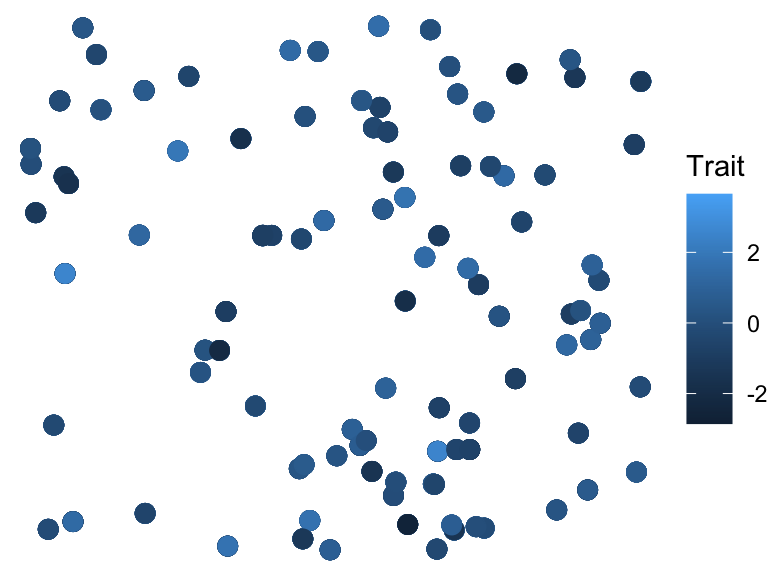
Random allocation of treatments to experimental units is also a critical aspect of experimental design
This form of randomization helps ensure that treatments are not confounded with other sources of variation. How? By reducing the chance that treatments are correlated with other sources of variation
Randomization
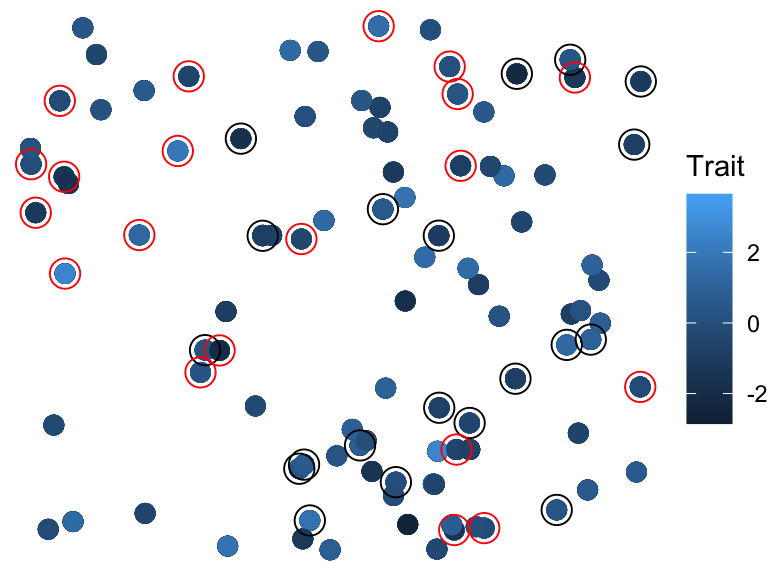
Random allocation of treatments to experimental units is also a critical aspect of experimental design
This form of randomization helps ensure that treatments are not confounded with other sources of variation. How? By reducing the chance that treatments are correlated with other sources of variation
Randomization
Random allocation of treatments to experimental units is also a critical aspect of experimental design
This form of randomization helps ensure that treatments are not confounded with other sources of variation. How? By reducing the chance that treaments are correlated with other sources of variation
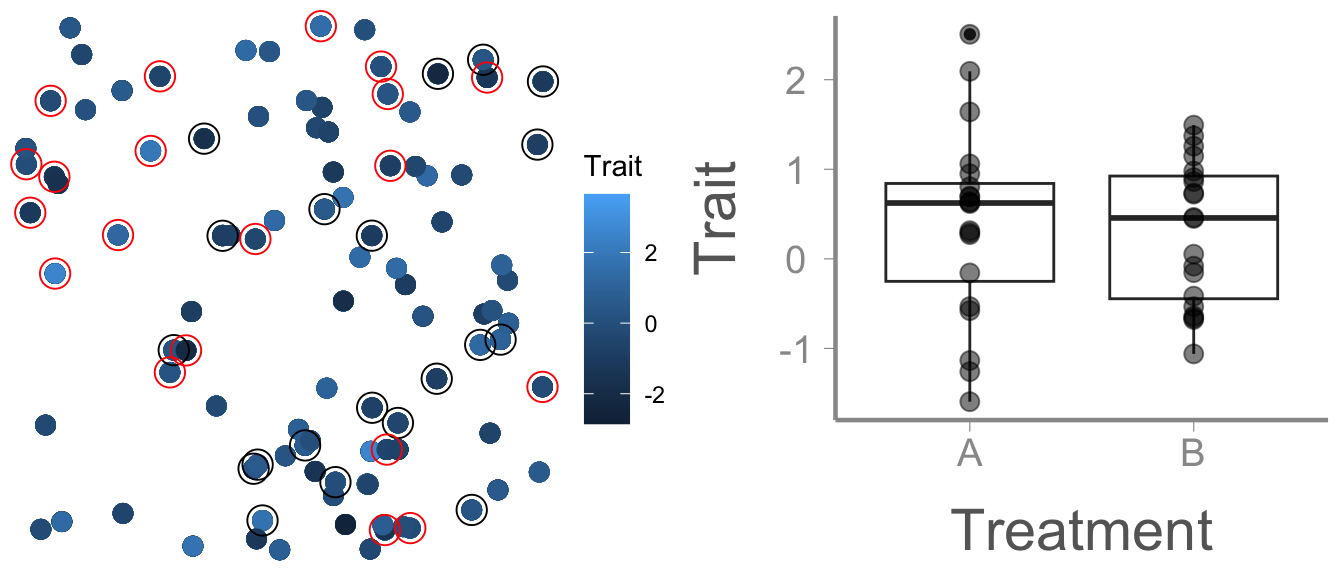
As before, randomized designs help reduce the risk of confounding, but do not guarantee it
Randomization vs interspersion
It is important to note that randomization is a method for reducing for confounding, not a goal in and of itself
An example to illustrate the difference. Assume in our previous example that we randomly selected trees for the exclosure experiment and ended up with the following design:
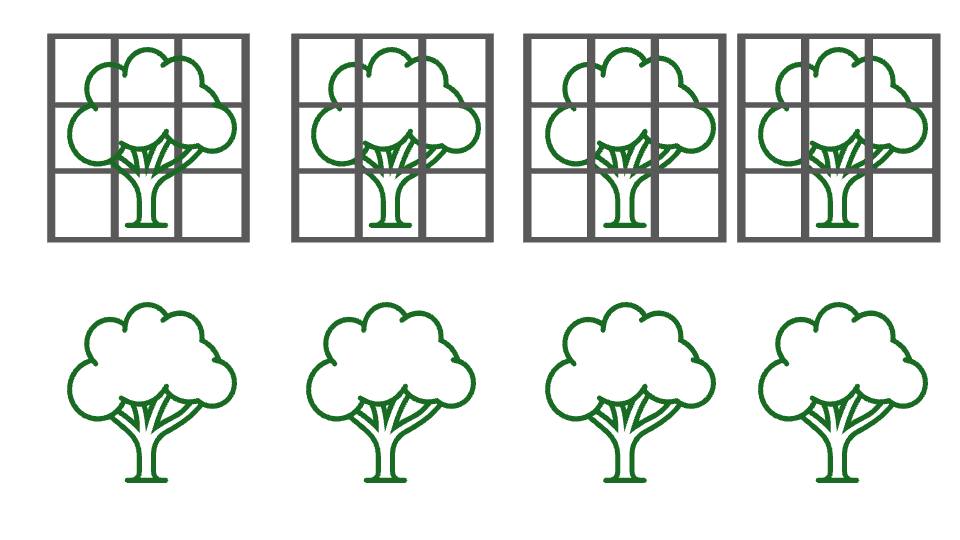
Questions: Is this a good experimental design? How should we proceed?
Randomization vs interspersion
This design is random but it is not interspersed
Random sampling can result in clustered designs, especially with small sample sizes, that may violate the exchangeability assumption
How should we proceed? We could re-randomize…
Randomization vs interspersion
Is this sample adequately interspersed? Is potential for confounding minimized?
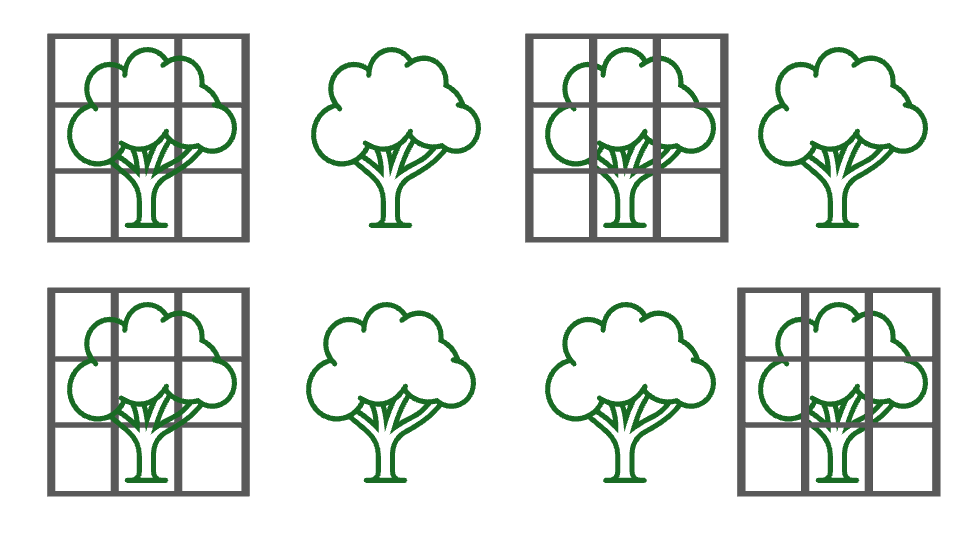
One risk of re-randomizing to achieve interspersion is that we risk re-randomizing until we get a design that “looks” random/interspersed
Do we still have a randomized design?
Pre-defined criteria can help reduce potential for randomizing your way to a non-randomized design
Randomization vs interspersion
Another option is to use regular/systematic allocation of treatments
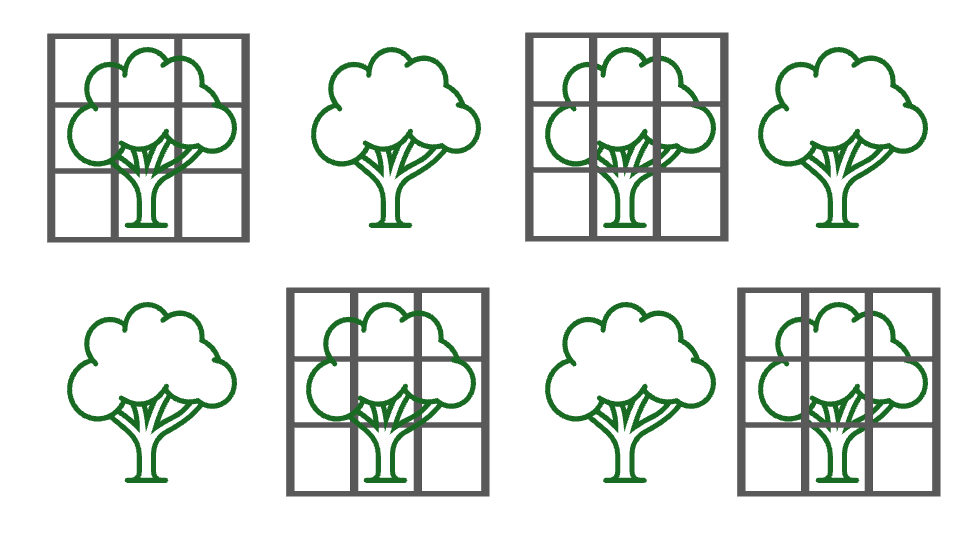
Systematic/regular allocation can be more appropriate to achieve adequate interspersion, but risks of confounding remain
Often, final design will be compromise between randomization, risk of confounding, and logistical constraints
No easy answer
Make decisions ahead of time, document process, and be transparent
In certain situations, confounding can be addressed statistically (more on this later)
Controls
Example: We are interested in whether two closely related salamander species compete with each other. To test this, we establish study plots and count the number of individuals of the focal species in each plot. After four years, we randomly select half the plots and remove all individuals of the other species. We then monitor abundance of the focal species for 4 more years (ensuring no individuals of the other species re-colonize the plots)
- In this case, one might use the “before” and “after” periods as treatments to test for an effect
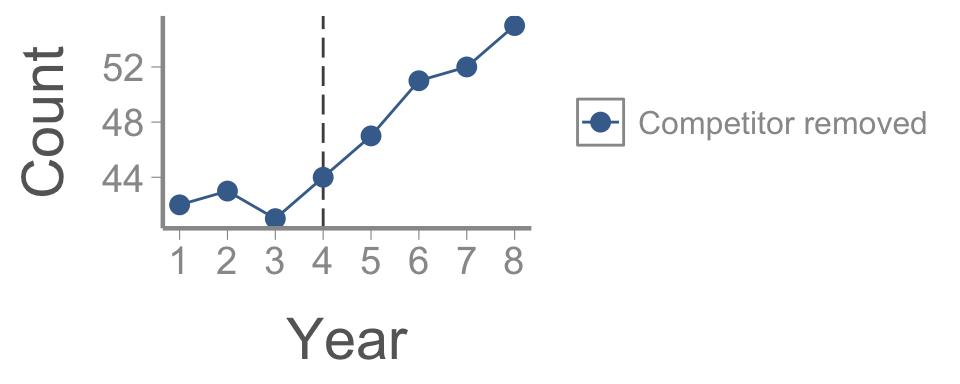
Question: Does our data provide evidence that the species compete?
Controls
Although it seems clear that abundance increased after the competitor was removed, we do not know what would have happened if we hadn’t remove the competitor (i.e., the counterfactual)
The plots where the competitor wasn’t removed serve as controls, allowing us to formally test whether the response variable changed in the absence of the treatment
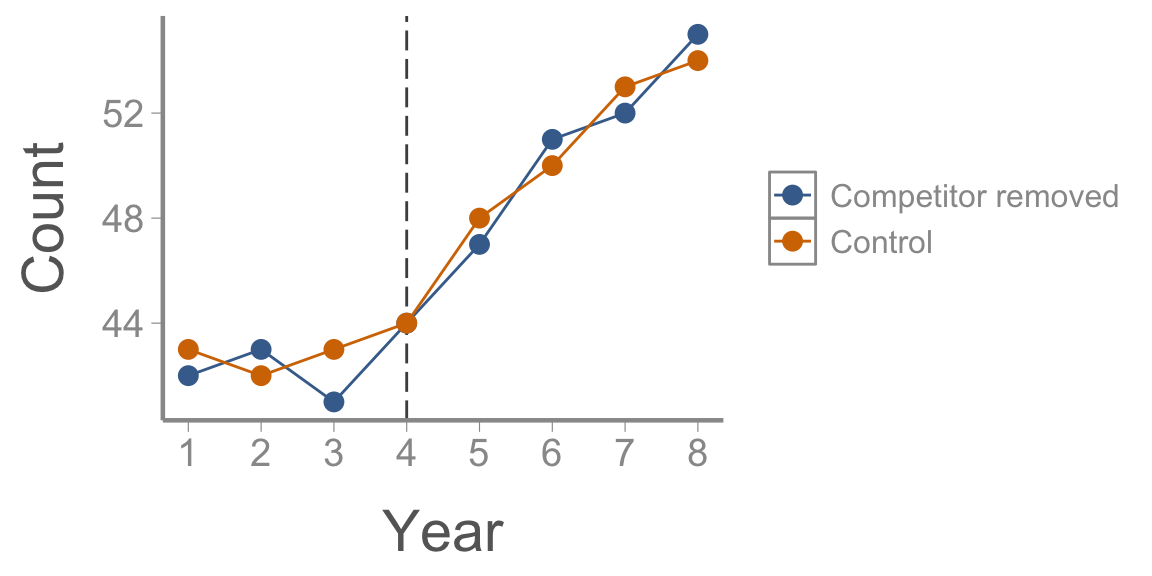
Question: Does our data provide evidence that the species compete?
Footnotes
Causal inference from observational studies will be the focus of lecture 14
In other words, to distinguish between causal vs. confounding effects
In other words, to distinguish between causal effects vs. noise
But does not guarantee!
But does not guarantee!
Though in studies with small samples sizes, stochastic violations of positivity can still happen
When combined with adequate replication and randomization